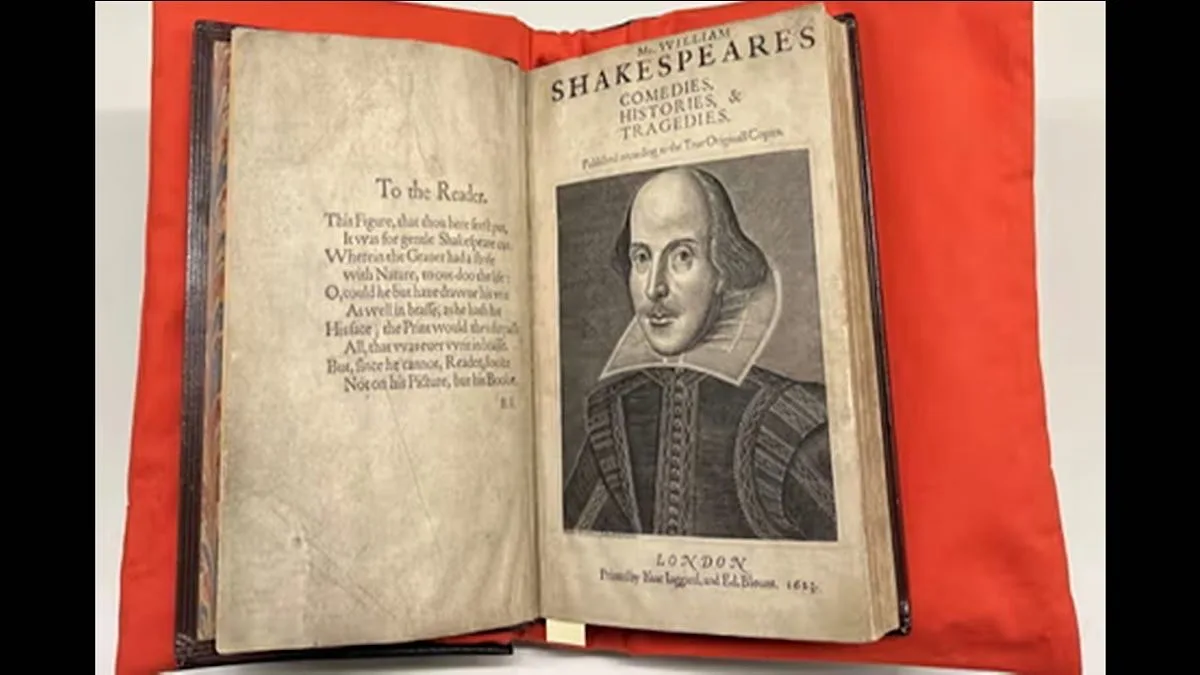
Have you ever tried reading Charles and Mary Lamb’s Tales from Shakespeare, out of sheer curiosity? As a middle schooler, when it was passed down to me by my cousin, I held the much revered title in my hands. It was my first introduction to the name Shakespeare. In school, Shakespeare was a mystery . A man whose plays were read with the same reverence as the holy books. My ever curious classmates had already begun exploring Julius Caesar.
But jumping from Agatha Christie to Shakespeare was like aiming for the stars in a paraglider. I can almost recollect the absolute confusion I felt when I discovered Twelfth Night. Who in their right mind ever confuses a girl for a boy, even though the character is dressed as a man? Why would a young man ever trust a ghost? Or, why would a king give up his throne? Having grown up in a family where the only luxury was a second hand book and every one read a book of fiction for hobby, I too was taken in by the whirlwind of excitement.
Advertisement
With determination, I decided to open my mind to the fictitious world of Arden and Venice, Denmark and Britain and many more. Back then, I had very little idea about stage performances. Of course, I watched televised drama. But Lamb’s tales were told with a different flavour – a taste that I still enjoy in the classroom. So, how do I encourage my students to explore the famous mystic – Shakespeare ? My strategy is simple. I familiarise the learners with works of Shakespeare in capsules. Once I invited three learners to play the opening scene of Macbeth.
Once I conducted a quiz on the tragedies of Shakespeare – King Lear, Hamlet, Julius Caesar and Macbeth. I even assigned students to integrate digital art medium to design commercial posters of As You Like It. What fascinates the students is discovering the poetry of the language – “Fair is foul, foul is fair, Hover through the fog and filthy air.”- Macbeth, Act I Scene 1 the variety of emotions they encounter, – “How sharper than a serpent’s tooth it is / To have a thankless child!” — King Lear, Act 1, Scene 4 the scope for performance and the majesty of the characters. Ideally I enjoy introducing a mix of Shakespeare’s plays at school level – from the comic Comedy of Errors, to the wise The Tempest, from the tragic Hamlet to the tragi-comic The Merchant of Venice.
Learners are encouraged to read and discover sibling relationship, plight of the colonised, hunger for revenge and friendship through the Lambs’ Tales. I have even experimented by encouraging learner to compare these aspects with their real life experiences or comment on any episode that they might have heard on the news. Subsequently, when they present their findings and discuss characters, plots and even lines – they realise what a treasure they have unearthed! To summarise, in the words of the poet David McCord – Books fall open, you fall in. So enjoy the Tales and grow with the children.
(THE WRITER IS THE COORDINATOR, MAHADEVI BIRLA SHISHU VIHAR, SERIES EDITOR, ENGLISH PRESS, MEMBER, IPPL)